Process application

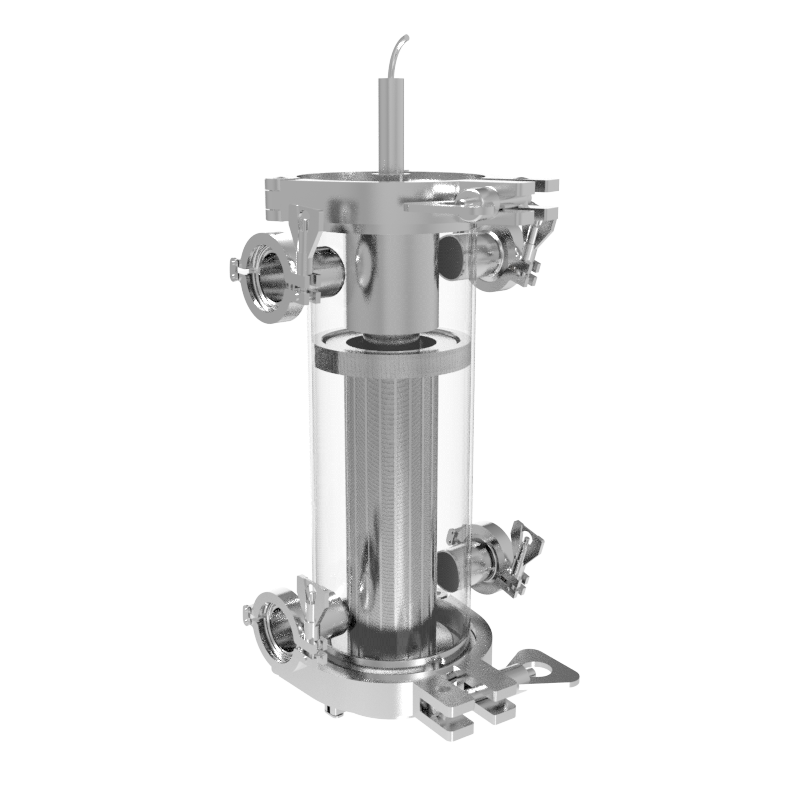
Ultrasonic Defoamer

Ensuring the safe storage of materials

Ensuring safe material storage while balancing material transfer efficiency between upstream and downstream production lines.

Ultrasonic Defoamer

Product Characteristics

Environmental Protection

Integrated blower function prevents material dust from dispersing into the environment.

Flexibility

Modular design facilitates easy disassembly and assembly, allowing flexible upgrades based on material characteristics.

Free from Maintenance

Equipped with jet-type self-cleaning filter elements, requiring no frequent replacement, and utilizes high-quality blowers for extended service life.

High Applicability

Supports customization of material, capacity, filtration precision, conveying accessories, and auxiliary functions.

Technical Parameters

NameParameters
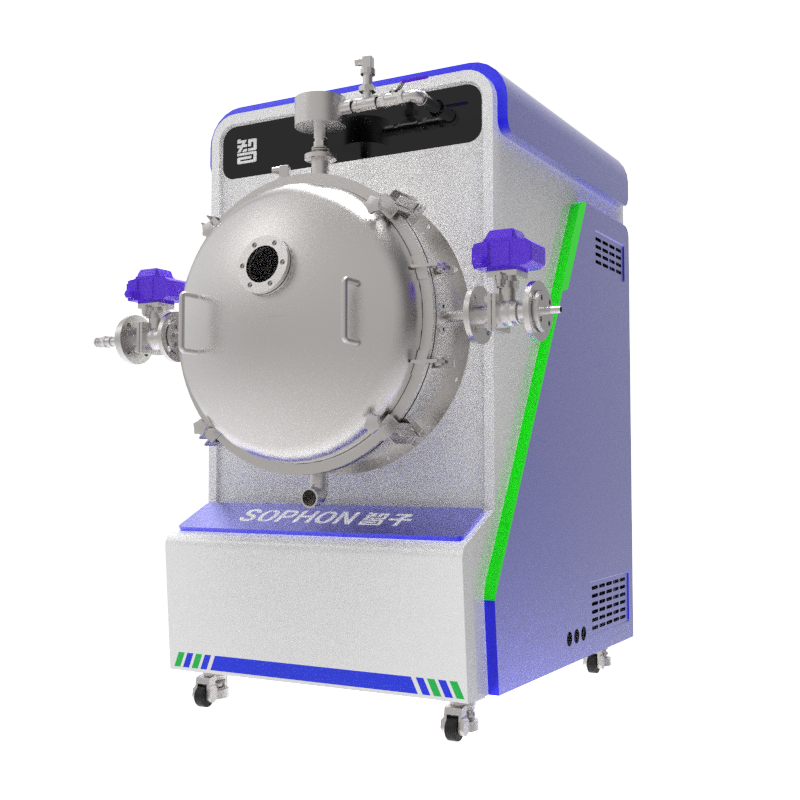
Equipment NameUltrasonic Defoamer
Dust Collection Fan1.1KW
Vibrating Fan0.12KW
Gas Supply Pressure0.4-0.6MPA
Air Consumption of the Compressor20L/MIN
Supply Voltage380V

Maintenance and Services

of Ultrasonic Defoamer
Cannot find the solution you are looking for? Please visit our Q&A Center for answers, or contact us for further help and support.
Q Working Principles of the Ultrasonic Defoamer
The ultrasonic defoamer, also known as an ultrasonic deaerator, operates on the core principle of utilizing ultrasonic energy to eliminate bubbles in liquids. During operation, an ultrasonic generator produces high-frequency electrical signals, which are converted into mechanical vibrations (ultrasonic waves) of the same frequency by a transducer. These vibrations are transmitted through a medium (typically water or coupling fluid) to the container wall and then into the liquid being processed. As ultrasonic waves propagate through the liquid, they create alternating high-pressure and low-pressure cycles. During the low-pressure phase, micro-bubbles dissolved in the liquid rapidly nucleate and grow; in the subsequent high-pressure phase, these bubbles are violently compressed and implode (collapse), a process known as the "cavitation effect." The powerful shockwaves and localized high temperature and pressure generated by cavitation effectively break down existing large bubbles in the liquid into micro-bubbles, accelerating their dissolution or rise to the surface, thereby achieving rapid and efficient deaeration.
Q Can the equipment be customized?
Customization of an ultrasonic defoamer requires comprehensive consideration of the material characteristics and production requirements.
Processing Method: Depending on whether the material container is a drum, bottle, or tank, options include tank-type (immersing the entire container in an ultrasonic water tank), immersion-type (immersing the transducer plate into a large material tank), or inline-type (integrating into a pipeline for continuous online processing).
Power and Frequency: Based on material viscosity, processing volume, and deaeration precision requirements, determine the total ultrasonic power and frequency (low frequencies such as 20KHz, with higher energy, are suitable for high viscosity; higher frequencies such as 40/80KHz are gentler and suitable for precision liquids).
Capacity and Material: Determine the size of the water tank or processing chamber based on the batch processing volume. Components in contact with the liquid (e.g., water tank, transducer plate) must be selected according to material corrosiveness, using materials such as SUS304/316 stainless steel or titanium alloy.
Control System: Functions such as heating, timing, stepless power adjustment, lifting mechanisms, and PLC touchscreen control can be customized to meet automated production needs.
Safety and Certification: For special environments, explosion-proof design or compliance with the certification standards of specific industries (such as medical and food) can be required.
Q Maintenance of the Equipment
Regular maintenance is fundamental to ensuring equipment performance and longevity.
Daily Maintenance: After each use, drain and clean the water tank to prevent scale and residual material from corroding the equipment. Keep the exterior of the equipment dry and clean.
Regular Inspection: Periodically inspect the performance of transducers or vibrating plates to ensure they operate normally without abnormal vibrations. For tank-type equipment, always maintain liquid levels sufficient to submerge the transducers. Starting the ultrasonic system without water is strictly prohibited, as this is the most critical maintenance point.
Scale Prevention: In areas with hard water, it is recommended to use deionized water as the medium and regularly clean the water tank and transducer surfaces with descaling agents to prevent scaling from affecting energy transfer efficiency.
Long-Term Storage: If the equipment is to be idle for an extended period, clean and dry it thoroughly, and store it in a well-ventilated, dry location.
Q Precautions
Safe and standardized operation is crucial for both equipment and personnel.
Strictly Prohibit Dry Operation: For tank-type equipment, ensure sufficient water or coupling fluid is present in the tank before activating the ultrasonic function. Operating without liquid is absolutely prohibited, as it can instantly damage the transducers.
Material Compatibility: Processing containers must effectively conduct ultrasonic waves (e.g., glass, stainless steel). Avoid using wave-absorbing materials (e.g., soft plastics). Confirm that the material itself will not undergo property changes or degradation due to ultrasonic cavitation.
Safety Protection: Do not place hands directly into the active ultrasonic zone while the equipment is running to avoid discomfort or injury. Adhere to electrical safety standards and ensure proper grounding.
Malfunction Response: If abnormal noise, intense vibration, or uneven operation is detected during operation, stop the machine immediately for inspection. Do not resume use until the issue is resolved.

Expert Consultation Portal

Assisting you in formulating industrial upgrade plans

Reservation

Demonstration

Consultation
Customer Service